Monday, May 16, 2011

Follow us at Forbes.com!

The Automotive Intelligentia blog is now officially a part of Forbes.com.

You can find us under the Lifestyle/Autos section, or log on directly to our latest posts here.

We'll be posting weekly new-car road tests and features, as well as late-breaking updates and the occasional rants.

And be on the lookout for the long-awaited update of the original eBook new car guide, the "Automotive Intelligentsia 2011-2012 Sports Car Guide," coming for multiple electronic platforms and a print edition in June.


Friday, August 27, 2010

Fiat 500 Spied in Chicago


Okay, maybe it's not much of a spy shot when the name of the car is plastered all over the side of it, but we caught this Fiat 500 right after a photo shoot for the perky retro-styled coupe along Chicago's lakefront. Hopefully the production versions will come in more tasteful paint schemes when the "Cinquecento," as it's called in Italy, launches via a new network of dealerships by year's end. (Photo by Jim Gorzelany)

Tuesday, August 10, 2010

New Crash Tests Coming

Back in the 1980’s, government crash tests were heralded as the key for consumers to pick a safer car. Beginning with frontal collision tests and eventually branching out to side-impact and rollover tests, automakers soon learned how to engineer their cars specifically to garner top five-star ratings from the National Highway Traffic Safety Administration’s assessments. Today it’s difficult to find a model that gets less than four stars in any regard, which tends to make true comparisons of various models’ crashworthiness difficult.

And it’s made only more so by the fact that comparisons of frontal crash tests results are only relevant within specific size and weight classes. This means that a subcompact car that gets a five star ratings isn’t necessarily safer than a full-size model that gets only four stars for occupant protection in a head-on collision. The ratings also don’t take into consideration technology that can help motorists avoid getting into a crash in the first place.

Helping to correct these deficiencies, NHTSA is implementing a revamped five-star rating system beginning this fall with 55 of the most popular 2011 models across all car and truck classes. As before, low-volume luxury and sports cars will fall under the radar of the new ratings systems. In addition to tougher crash tests that will likely result in the agency issuing fewer stars for many models, cars will be rated according to a single overall safety score and will be rated against each other rather than against a standard performance level. It will also provide consumers with information about new advanced crash avoidance technologies, such as lane departure and forward collision warning systems.

While further details are as-yet unavailable, we applaud NHTSA for helping to bring its new car assessment program into the 21st Century. There may be some surprises in the first round of test results, with some former five-star-rated cars now getting as few as two stars, NHTSA says, so stay tuned.

Monday, August 2, 2010

When Silence Isn't Golden

When can a car run too quietly? Ironically when it makes no sound at all.

Electric and hybrid-powered cars, which run silently in urban passage, can be dangerous to blind pedestrians, who must otherwise rely on their hearing to determine the speed and proximity of traffic. The same can also be said for cyclists, runners, senior citizens and small children who may not otherwise be aware that cars are approaching. According to the National Highway Traffic Safety Administration, hybrid and electric vehicles are nearly twice as likely to be involved in accidents with pedestrians as vehicles with conventional engines.

Thus, both advocates for the blind and automakers have teamed up to draft proposed legislation, as part of the Motor Vehicle Safety Act of 2010 that would require hybrid and electric vehicles to emit a specified level of sound at lower speeds. "Good policy is a collaborative effort, and this is a good approach for pedestrians and automakers," says Dave McCurdy, president and CEO of the Alliance of Automobile Manufacturers.

While this sound could take the form of a “chirp,” or perhaps some futuristic humming ala George Jetson's flying car, exotic car-builder Lotus recently unveiled a more-creative alternative in a concept electric-powered version of its Evora sports coupe. Here, the driver can choose from four artificial engine “sounds” that play through the audio system’s speakers.

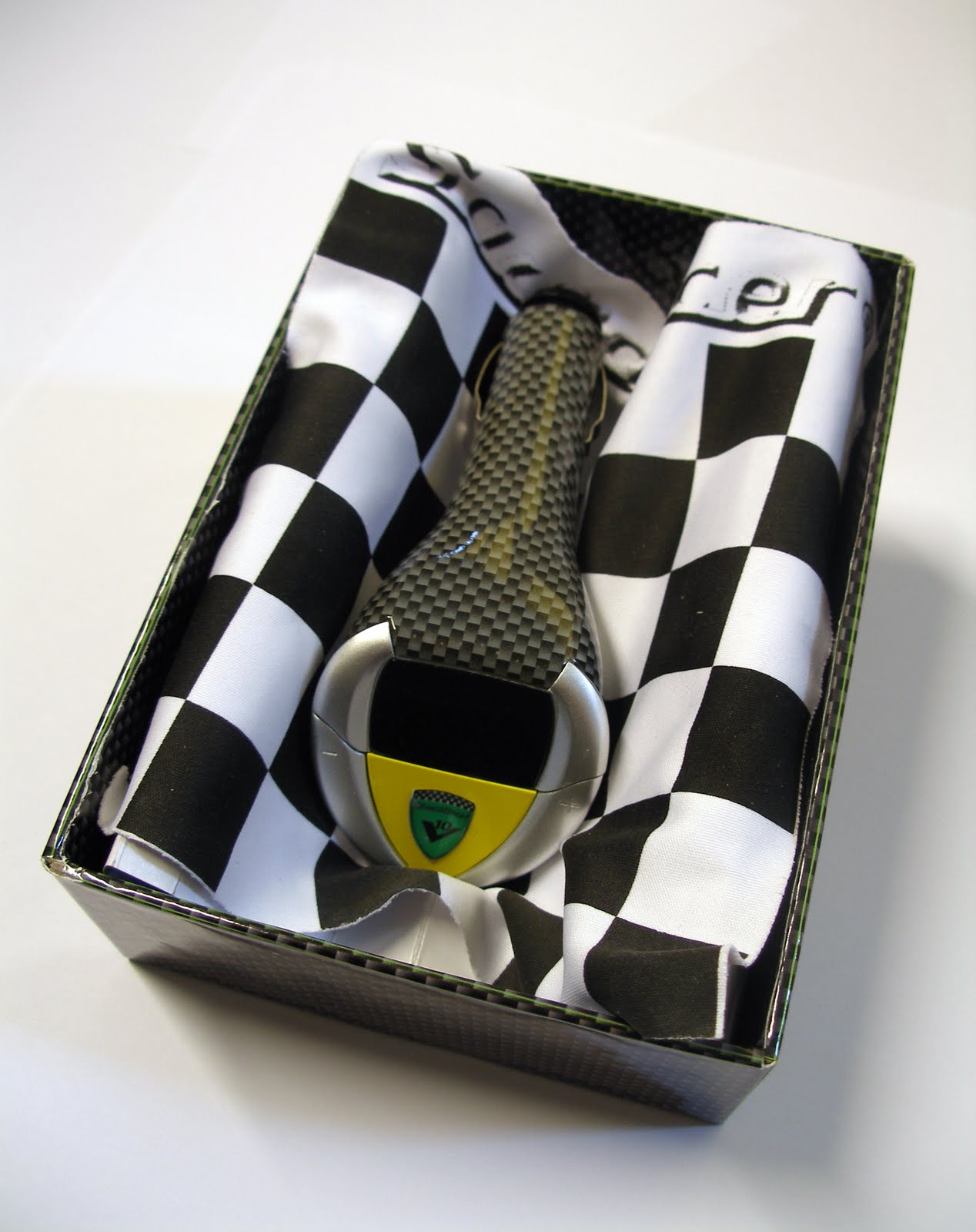
While that may sound futuristic, a recently released product called the Soundracer does essentially the same thing, making even an old beater at least sound like a lusty Lotus, and it does so for only $40. Offered in V8 and V10-engine versions, the device plugs into a 12-volt power point and replicates a sports car engine’s roar through the car’s audio system via a built in FM transmitter. And it does so in perfect sync with the vehicle’s actual accelerations and decelerations (we've tested it and it really works). It also doubles as an audio adapter for MP3 players. (www.soundracer.se)

If to you this all sounds like a high-tech approach to the bygone practice of pinning baseball cards to a bicycle so they flap against the spokes to simulate an engine sound, well, you’re not alone.

Wednesday, July 14, 2010

Help Build a 'Vette


In an unprecedented move, Chevrolet is letting purchasers of either the ZO6 or ZR1 versions of the venerable Chevrolet Corvette actually help assemble their cars' engines at General Motors’ Performance Build Center (PBC) in Wixom, Mich.

Fortunately this is performed under the supervision of and support from skilled technicians. When the engine is assembled, a personalized nameplate is added to the engine next to the builder’s name. It is then sent to the Corvette assembly plant for installation in the customer’s car.

“Corvette owners are some of the most passionate – and most involved – enthusiasts in the industry,” said Jim Campbell, U.S. vice president, Chevrolet marketing. “The Corvette Engine Build Experience offers customers an unprecedented opportunity to participate, hands on, in creating the car.”

While you'd typically get a discount for putting in your own labor to partially assemble something you're buying, the Engine Build Experience, as it's officially called, is a $5,800 MSRP option. And on top of that, hotel accommodations and travel arrangements are extra.

Monday, July 12, 2010

Driving off Into the Sunset


Sales are winding down on two long-running retro-styled models that once turned heads like few other cars. Both the Chrysler PT Cruiser and Volkswagen New Beetle will be discontinued this fall.

Introduced in 2000, the PT Cruiser quickly became Chrysler’s top seller. The compact wagon looked like a hot rod, but featured flexible minivan-like seating that could accommodate various cargo configurations. Selling over 1.3 million units with a line that once encompassed turbocharged and convertible versions, the PT Cruiser languished in recent years and will fade away in only a single “Classic” model.

The New Beetle, which updated the memorable “Bug” from the 1960’s and ‘70s, likewise had buyers packing VW showrooms when it debuted in 1998. Including turbocharged and convertible variants (and, briefly, a diesel-powered model), it struck a decidedly emotional chord with its owners. The iconic car celebrates its departure with limited “Final Edition” models that sport unique paint treatments.

In truth, VW had nowhere to go with the New Beetle other than making minor updates. If they changed the look too much it wouldn't be a Bug any more. We'd like to see the company revive its plans to build a modern-day Microbus to keep the nostalgia ball rolling, but those plans were nixed years ago. VW has since taken the path of least resistance by selling an only nominally revised version of Chrysler's minivan, the Routan.

Chrysler, meanwhile had a lot more latitude with the PT Cruiser--the same basic idea of a small, stylish and utilitarian wagon with minivan-like features could have been recast any number of ways. Alas, while the company may have had ideas on the drawing board, a lack of cash was the obvious culprit, and the car's aging mechanicals demanded Chrysler make more than just cosmetic changes.

Thursday, July 8, 2010

Limited Time Only -- 50% Off!


Just in time to make your summer reading list! The Automotive Intellgentsia 2009-2010 Sports Car Guide eBook edition for multiple platforms (including PC and Mac) is available at 50% off the $5.99 retail price through July 31, but only via this link at Smashwords.com. Be sure to enter the code SWS50 at checkout to receive the half-off discount.

Tuesday, July 6, 2010

Hello Again

Back from an extended hiatus to recover from hip surgery and complete assorted projects, hoping to post regularly again. First up is a big announcement about a new AI-branded eBook (See below).

--Jim Gorzelany

NEW: Automotive Intelligentsia Money-Saving New-Car Guide


Finally comes the second book in the Automotive Intelligentsia series, and it's one that's sure to be many times more valuable than its cover price.

The Automotive Intelligentsia Money-Saving New-Car Guide is aimed at helping motorists maximize one of the largest capital outlays they’ll ever make. The book takes an engaging step-by-step approach to acquiring a new car or truck, keeping a sharp eye on the bottom line at every turn. Readers will discover how to choose a vehicle that best meets their needs and budgets, and has the lowest long-term ownership costs; they'll learn how to take a test-drive, get the most money for their trade-ins and negotiate a rock-bottom price, among other topics.

The
Automotive Intelligentsia Money-Saving New-Car Guide also details what buyers can expect to find among each of 11 separate new-vehicle categories, from subcompacts to electric cars, including capsule reviews of all available makes and models to help jump-start their research. That's 254 cars and trucks in all.

By following the time-tested techniques presented in the Automotive Intelligentsia Money-Saving New-Car Guide readers can keep thousands of dollars in their pockets over a typical ownership period.

Now available for the Amazon Kindle eBook reader for $6.99 via this link and for other formats via this link. Coming soon for Apple, Sony and Barnes and Noble and in a paperback edition.

Wednesday, December 2, 2009

AI 2009-2010 Sports Car Guide Now Available at B&N, Sony and Apple

The electronic version of the Automotive Intelligentsia 2009-2010 Sports Car Guide is now available at Barnes and Noble online for multiple platforms, including PC and Mac. It's only $5.99 and is available via this link. It's also now offered for the Sony eBook readers and via Apple's iBooks store for the iPad, iPhone and iPod Touch, also for $5.99

Friday, October 9, 2009

Would You Like Egg Roll With That?


What could be more American, Part Two...

General Motors announced today (10/9) that it had reached and agreement with Chinese manufacturer Sichuan Tengzhong Heavy Industrial Machinery Co., Ltd (Tengzhong) to sell 100 percent of Hummer brand to the company. This would essentially make it the first Chinese automaker to do business in the U.S.

Under the agreement, Hummer would contract vehicle manufacturing, key components and business services and dealer agreements from GM during a defined transitional time period. GM's Shreveport assembly plant would continue to contract assemble the H3 and H3T and AM General's Mishawaka assembly plant will continue to assemble the H2. Both facilities will produce the specified vehicles until June 2011, with an optional one year extension until June 2012. On the bright side, the deal is expected to secure more than 3,000 jobs in the U.S.

Optimistically, this is sure to expand the iconic brand's reach on the international scene – most notably in China where affluence and the car culture are exploding at such a rapid rate Ferrari recently announced it would build a region-specific "China" edition of the 599 FTB Fiorano. On the other hand, this could be the final dagger in the chest here in the U.S. for a brand that has already suffered for its perceived largess and ecological unfriendliness.

UPDATE: That deal has since fallen through and GM will allow the Hummer brand to limp along through the end of the model year. It will be phased out completely unless the company can somehow find a buyer for the iconic brand. Dedicated Hummer dealerships will be shuttered, though GM will continue to service vehicles and honor warranties, most likely via Chevrolet and GMC dealers (the H2 and H3 shared parts with trucks sold under those brand names).

Sizing Up 'Clunkers'


Conceived as a prime weapon in the federal government’s economic stimulus package, the much-ballyhooed Car Allowance Rebate System – popularly known as “Cash for Clunkers” – seems to have been a success, at least in terms of luring Americans into showrooms at a rate auto dealers haven’t seen in years. The Department of Transportation reports that 690,114 sales were registered under the program, with the total value of the rebates claimed by dealers totaling $2.88 billion.

But exactly who were the biggest winners under this program, aside from the consumers who leveraged some virtually worthless old gas-guzzlers for as much as $4,500 toward a new model? As it turns out, the import brands, which had more fuel-efficient cars to offer than the domestics, moved the most metal, accounting for 61.4 percent of all vehicles sold under the Cash for Clunkers promotion. By comparison, Detroit’s “Big Three” automakers – Ford, General Motors and Chrysler ­– garnered 38.6 percent of applicable sales. This is proportionately less than their combined share of the U.S. market, which stood at 45 percent over the first seven months of 2009.

According to the DOT, all but two of the top 10 selling vehicles under the program – the Ford Focus and Escape ­– carried Honda, Hyundai, Nissan or Toyota nameplates. Toyota scored 19.4 percent of all eligible sales, primarily with its Toyota and Scion brands. By comparison, General Motors’ eight combined divisions took 17.6 percent and Ford Motor Company’s four brands registered 14.4 percent of CARS sales. Honda registered 13 percent of eligible transactions, with 8.7 percent going to Nissan.

Not surprisingly the most traded-in clunkers were all domestic trucks, vans and SUVs. That’s because the rules were skewed to get older, low-mileage trucks off the road. To qualify, vehicles had to carry a fuel economy rating of 18 mpg or less and be less than 25 years old. When we searched a database of 10-year-old vehicles, for example, virtually the only non-trucks we could find that would have qualified were a handful of high-powered sports cars that were worth much more in trade than the government’s rebate program would have allowed.

Aside from providing a much-needed economic shot in the arm, Cash for Clunkers’ secondary goal was to replace inefficient older vehicles on the road with higher mileage models. In that regard the program was reasonably, though not necessarily dramatically, successful. The average fuel economy of traded-in vehicles was just shy of 16 miles per gallon, while the ones that replaced them in Americans’ driveways registered around 25 miles per gallon.

According to estimates provided by the Environmental Protection Agency, someone driving 15,000 miles per year who chooses a 25-mpg vehicle instead of one that gets 16 mpg will save 7.7 barrels of crude oil and emit 4.1 tons fewer greenhouse-gas pollutants annually. Multiplying these figures by the number of vehicles sold under Cash for Clunkers indicates the program has the potential to save as much as 5,313,878 barrels of oil and 2,829,467 tons of CO2 emissions over the coming year. Unfortunately, the actual savings is likely to be a lot less, since not all of the models traded in were likely daily drivers.

Of course industry-wide sales have already tanked by and large since the program expired, though by all accounts it did help clear up dealers' 2009 inventories, at least as far as small-to-midsize cars are concerned. On the other hand, those in the market for a large truck will be treated to automakers' rebates on outgoing 2009 models that put the Cash for Clunkers incentives to shame. How rich are they? Try $7,500 cash back on a Cadillac Escalade. It's $6,500 back on a Chevy Tahoe or Suburban SUV, $6,500 on a Dodge Ram and $5,000 on a Nissan Titan pickup.

Image courtesy SF Appeal.

Tuesday, September 15, 2009

Review: Ford Fusion/Mercury Milan Hybrids


There are two types of hybrid gas/electric-powered vehicles on the market, and they differ primarily in terms of their outward appearances. In one corner we have models like the industry leading Toyota Prius and the recently added Honda Insight, which are both offered exclusively as hybrids and come wrapped in distinctive-looking futuristic styling. Not only is this to maximize their aerodynamic abilities, it sets them apart from all other conventional vehicles and loudly boasts to the world that their owners are environmentally conscious motorists.

And then there are gas/electric versions of otherwise ordinary vehicles, like the Toyota Camry Hybrid and Honda Civic Hybrid, that tend to get lost in a crowd, being outwardly distinguished mainly by specific badging and some added dashboard gauges. They don’t flaunt their “greenness,” but just quietly register what are comparatively impressive fuel economy ratings.

Currently the best of the latter group are the new-for-2010 Ford Fusion Hybrid and its corporate cousin, the Mercury Milan Hybrid. They combine stellar fuel economy with all the standard models’ goodness, which means handsome and uncluttered styling with roomy and comfortable interiors, a smooth ride and predictable handling. By comparison, the Prius is smaller and feels cheaper, though in fairness it does start out at a lower price ($21,000 versus $27,625/$27,855). The Fusion and Milan Hybrids are virtually identical save for their brand-specific front-end treatments; the Ford assumes the corporate multi-bar grille, while the Mercury gets a slightly more formal look up front.

Here, a 2.5-liter four-cylinder engine is augmented by an electric motor/generator and a self-charging battery pack; a gearless Continuously Variable Transmission affords smooth and uninterrupted acceleration. This powertrain can deliver V-6-like thrust when the accelerator is mashed to the floor, but is generally well mannered in normal city driving. Ford says the cars can run exclusively on battery power at speeds up to 47 mph, but we had trouble keeping either model off the gas at anything over about 20 mph. As with all other hybrids, the gasoline engine shuts down automatically at idle to further save gas and starts up immediately when necessary.

The EPA rates the Ford Fusion and Mercury Milan Hybrids to achieve an estimated 41-city and 36-highway mpg – hybrids typically get better city mileage, as that’s when the electric motor does most of the heavy lifting. Our testers showed long-term combined city/highway fuel economy at around 38 mpg, which is right on the money, and is darned impressive for a bona fide five-passenger sedan. By comparison, the V-6 gasoline versions, which perform similarly, get 18/27 mpg. The EPA says choosing the hybrid instead of the V-6 will save around $800 in fuel costs (with 15,000 miles driven at $2.44/gallon) and four tons of greenhouse-gas emissions annually.

Both models come generously equipped, with a GPS navigation system and a luxury-equipment package that contains things like leather heated seats a rear-view camera and a blind-spot warning system coming optional. A novel dashboard LCD display can help drivers garner maximum miles per gallon via various gauges and graphics; these include a stem with leaves – the more leaves growing from it, the “greener” a motorist is driving. Other than carrying a higher sticker price than the gasoline-powered versions of the Fusion and Milan, the biggest trade-off here involves reduced trunk space, given that the cars’ battery packs reside behind the rear seats. And unlike the standard versions, the Hybrids cannot be fitted with all-wheel drive.

In all, the Ford Fusion Hybrid and Mercury Milan Hybrid are great choices for those who want to save money at the pump and help the environment, and want to own a car that looks and feels like an “ordinary” model.

Wednesday, September 9, 2009

McLaren Road Car Coming


Famed Formula One race-car maker McLaren announced it will be building and selling its first-ever road car – the McLaren MP4-12C – via a new worldwide network, beginning in 2011. The automaker says the low-slung sports car will leverage the best of Formula 1-inspired engineering, with revolutionary chassis architecture and an "absolute focus" on fuel efficiency. Currently the company teams with Mercedes-Benz (its partner in F1 racing) to produce the SLR McLaren supercar.

Anticipated to be the first in a range of new models to come from the Woking, England-based company, the two-seat McLaren MP4-12C will feature scissor-opening doors and be built on a strong and lightweight one-piece carbon fiber mono-cell structure. A mid-mounted 3.8-liter V8 engine promises a whopping 600 horsepower. With an output of just 1,000 units a year planned, the car is expected to be priced somewhere in the $200,000 range.

Friday, September 4, 2009

Guns and Hummers


What could be more American?

Lynch Hummer in Chesterfield, Mo. recently became the world's first combined Hummer and firearms dealership. Jim Lynch has turned his $7.5 million Hummer facility in this upscale St. Louis suburb into a shooting enthusiast's attraction. "It is a natural fit," says Lynch. "Our customers enjoy outdoor sports and the firearms have been a big hit with our Hummer owners."

With the automobile industry suffering sharp sales declines, Lynch found himself with what was an underutilized showroom, thus he now augments his Hummer H2 and H3 stock with hardware from Smith & Wesson, Colt, Glock and other gun-makers, as well as ammunition of all kinds.

Comment: “Natural fit” or not, the pairing makes us nervous. It’s kind of like having a combined Chevy dealership and liquor store.

(Photo courtesy of the St. Louis Business Journal)

Thursday, August 27, 2009

Review: Volvo XC60


Carrying a clean, uncluttered look with graceful curves that belie the brand’s prototypical boxy image, the new-for-2010 midsize Volvo XC60 is one of the rare crossover luxury SUVs that is both sporty and eminently family friendly.

It certainly looks the part of a contemporary upscale sporty crossover, with a big bold grille up front and a rear-end treatment that’s reminiscent of Volvo’s original P1800 from the 1960’s, albeit updated with LED taillamps. It’s far more attractive looking than the more wagon-like XC70 and the just plain bloated XC90. It fares well compared to the Infiniti EX and is less-garish looking than the Acura MDX.

The base model comes adequately powered by a peppy 235-horsepower 3.2-liter inline-six-cylinder engine, which should suffice for most buyers. We drove the costlier T6 version that includes a 281-horsepower turbocharged 3.0-liter inline-six; it accelerates strongly and smoothly, but never seems to overpower the vehicle. A standard six-gear automatic transmission operates flawlessly. We didn’t get a chance to test its mettle, but an “instant traction” all-wheel-drive system is optional on the base model and standard on the T6 for improved foul-weather performance.

The XC60’s interior is tastefully cast, with Volvo’s brand-minded sweeping dashboard shape and tall center stack of controls at the center. All instruments are reasonably legible and most controls are intuitive to operate. There’s sufficient seat travel up front for long-legged drivers to stretch out, with generous head and shoulder room front and rear. While we would have preferred a back seat that adjusts fore and aft to expand the XC60’s rear legroom a bit, cargo space is generous at 30.8 cu. ft. (it expands to 67.4 cu, ft. with the 40/20/20-split seat folded flat).

The Volvo XC60’s available navigation system features a truly intuitive interface and can be operated by either a small steering wheel-mounted joystick or a wireless remote control. The available panoramic sunroof covers most of the vehicle, though the inside cover is made of a mesh fabric that doesn’t do as good a job of keeping the heat out of the vehicle when parked as would a more-solid headliner cover.

Where the XC60 really shines is in its ride and handling characteristics, which we found to be well balanced; it takes the corners securely, gives the driver plenty of feedback and does an admirable job of soaking up pavement imperfections without losing its poise or shaking up its passengers unduly.

As befits the Volvo brand, standard and available safety features are plentiful and include the standard “City Safety” system that will automatically applies the brakes if necessary to avoid hitting a stopped vehicle at up to 19 mph. It works as advertised, but we’d rather have the optional blind spot warning system that helps prevent what would be more serious collisions at higher speeds.

Unfortunately, with a list price of $32,395 ($37,200 for the T6), the Volvo XC60 isn’t all that less costly than the automaker’s larger XC90, which offers a third-row seat for seven passenger use. Coming with metallic paint and the Multimedia and Climate Packages, ours stickered out at over $42,000 after delivery charge, which places it squarely in luxury territory, where brand loyalty and personal impressions tend to bank more than ultimate value. Those looking for the same sporty/practical combination in less costly venues can find it in more-pedestrian alternatives like the Nissan Rogue or Volkswagen Tiguan.

Tuesday, August 4, 2009

Talking and Texting Can Be Deadly


While states and municipalities are enacting laws that mandate hands-free cell phone operation under the guise that it’s inherently safer than talking while holding the unit to one’s ear, the results of a recent study prove this to be a false assumption.

According to the Itasca, Ill.-based National Safety Council, talking on the phone while driving is a dangerous distraction no matter how the calls are conducted. A study just published in the NSC’s Journal of Safety Research indicates that motorists using either hands-free or hand-held cell phones are equally likely to be involved in four times more crashes than non-conversant drivers.

Distracted drivers talking on their cell phones cause more than 636,000 crashes, 330,000 injuries, 12,000 serious injuries and 2,600 deaths each year in the U.S., says the NSC. A Nationwide Insurance public opinion poll found that a whopping 81 percent of the public admitted to talking on a cell phone while driving.

Currently no state completely bans all types of cell phone use (handheld and hands-free) for all drivers.

Another potentially fatal behind-the-wheel behavior is text messaging. An 18-month study conducted by the Virginia Tech Transportation Institute concluded that the risk of a driver getting into a collision is a staggering 23 times greater when he or she is texting. Researchers found that motorists generally spend close to five seconds looking at their phones (instead of the road) while entering text messages, which is enough time to inattentively cover a full 100 yards at highway speeds.

A full trillion text messages were sent by U.S. cell phone users last year, says the industry’s trade group CTIA, which is up exponentially from 14.4 million e-missives in 2000. Currently, 14 states prohibit texting while driving, with the U.S. Senate currently considering a bill to ban the behavior on a national level.

According to the National Highway Traffic Safety Administration, 80 percent of automobile crashes and 65 percent of near-crashes involve driver distraction.

Tuesday, July 21, 2009

AI Sports Car Guide Now in Print Format!

The Automotive Intelligentsia 2009-2010 Sports Car Guide is newly offered in a full-size paperback print edition. As in the electronic version it spotlights 54 of the most coveted rides on the road. Full-length profiles place the reader firmly behind the wheel and chronicle each model's heart-pounding performance, advanced technology and storied heritage, complete with illustrations and specifications. The print version of the Automotive Intelligentsia 2009-2010 Sports Car Guide is available via Amazon.com by clicking here, or can be ordered immediately from the publisher via this link. Only $10.99.

Click here to read a sample chapter.

Plus, the electronic version remains available for the Amazon Kindle and Apple iPhone/iPod Touch for $5.99 via this link. Also coming soon for the Sony eBook reader and via Barnes and Noble for multiple platforms.

Coming this Fall: Automotive Intelligentsia 2010-2011 Hybrid/Electric Car Guide.

Wednesday, July 15, 2009

Review: Mazda6


Generally speaking, the automotive press roundly lambastes the top-selling sedan in the U.S., the Toyota Camry, for its pronounced lack of road feel and responsiveness. While we feel this is a slap in the face to the millions of motorists who own a car for the proverbial “getting from Point A to Point B” reasoning, there indeed remains a market out there for otherwise practical autos that can boast “fun to drive” as a meaningful attribute. BMW and Audi sales can attest to this, though their sporty sedans tend to be priced out of the financial range of the typical family-car buyer.

Enter the Mazda6, which is a refreshingly stylish and capable alternative to more-sedate midsize sedans like the aforementioned Camry, the Honda Accord and the Chevrolet Malibu. Sticker prices range from $18,550 to $28,465, depending on the trim level, which is far less expensive than any of the bona fide European sports/luxury sedans. Best of all, while it’s more enjoyable to drive than the typical rental-fleet ride, it won’t beat up its occupants with unduly harsh road manners as a trade-off for the added handling capabilities.

While we tend to like the current Camry’s oddly bulbous design about as much as we dislike the Accord’s too-safe exterior approach, the Mazda6 is more muscular looking than either of them, particularly from a frontal ¾ view in which the car’s burly fender flares give it a more-aggressive look than virtually all cars in its class. Inside, the Mazda6 is all business, with most controls intuitive to operate and an instrument panel layout hampered only by smallish graphics that could be easier to recognize at a glance. Interior materials generally have a rich feel, and the dashboard is nicely lit in red and purple at night.

The Mazda6 coddles both front and rear-seat riders with plenty of interior space and comfort, and even those sitting behind six-footers will enjoy ample leg room. Trunk space is likewise generous.

Our tester came powered by a lively 272-horsepower 3.7-liter V6 engine that was more than up to the task of getting up to highway speeds briskly. A 170-horsepower 2.5-liter four-cylinder powerplant is standard and should be sufficient for most drivers, particularly those who are on a budget and want to maximize the car’s fuel economy (21-city/30-highway, versus 17/25 with the V6).

A six-speed manual is the standard transmission for purists, with a smooth-shifting five-speed automatic transmission optional elsewhere in the line for those who favor convenience. Meanwhile, the “S” model includes a new six-speed automatic that features an Active Adaptive Shift function that can sense when the car is driven on a winding road or is merging/passing on the highway and optimize the gear ratio and acceleration accordingly.

Handling is the Mazda6’s claim to fame, and it does not disappoint in that regard. Even the base model feels tighter through the turns than the typical family car and is able to maintain a reasonably smooth ride in the process. The “Touring” version adds a sport suspension and 17-inch wheels and tires to ratchet up the car’s cornering prowess, albeit at the expense of a slightly rougher (but still quite acceptable) ride.

The options list is long and includes an array of high-tech items like the blind-spot monitoring system with which ours was equipped. Giving visual and audible alerts to warn a driver when another car is sitting in his or her blind spot, this is a practical feature that should be offered on all cars. Be warned that loading up the Mazda6 can be an expensive proposition. Our Grand Touring model stickered out at over $30,000 and that was without a navigation system and other top-shelf-type features. That said, it’s about as easy to find Camrys and Accords sitting on dealers’ lots for that price and much higher.

Monday, June 22, 2009

Review: Chevrolet Camaro


One of the most-awaited new-car introductions in recent years, and one of the few bright spots these days for the beleaguered General Motors, is the updated 2010 rendition of the classic Chevrolet Camaro. While one could argue that, at least in hindsight, GM should have put the development money toward bringing a small and highly fuel-efficient car to market sooner, at least the Camaro helps bring a bit of enthusiasm to the brand.

For starters, the recast coupe comes wrapped in broad-shouldered styling that pays homage to the original in a contemporary manner. No mere retro-poseur, the new Camaro rides on completely contemporary underpinnings. The LS and LT versions pack a 3.6-liter direct-injection V6 engine that generates 304 hp, which should be sufficient for most buyers. By comparison, the aforementioned LT-1 V8 in the previous generation could muster “only” 275 horses, which still seemed quick even in the late 1990’s.

On paper the V6 engine should feel faster off the line, but it’s weighed down by the car’s sheer bulk. It does, however, get up to speed adequately and the driver is treated by one of the sweetest and throatiest exhaust notes we’ve heard in recent memory. Thanks to modern engine technology the V6 gets what amounts to impressive fuel economy – it’s rated at 29 mpg in (we assume polite) highway driving. We got a solid 21-mpg in mostly lead-footed city driving.

A six-speed manual transmission is standard, and though it’s far easier to work than the Camaro’s clumsy stick shifts in earlier eras, the clutch-averse can alternately choose a six-speed automatic gearbox that includes manual “TAPshift” controls. Unfortunately, these are buttons that reside at the rear of the steering wheel, and are not true paddle shifters as the faux paddles on the wheel might otherwise indicate. This also makes it difficult to shift gears while turning the steering wheel.

Meanwhile the power-hungry will likely seek out the top SS model, which blows the doors off of the original with an authoritative 6.2-liter V8 engine. Shared with Chevy’s Corvette, the V8 generates a rousing 426 hp with the standard six-speed manual transmission. Be aware, however, those choosing the automatic gearbox are penalized with a slightly weaker 410-horsepower version of this powerplant that automatically shuts down half the cylinders at cruising speeds to help boost its mileage.

A nearly ideal front-to-rear weight distribution and a fully independent suspension at all four corners delivers steadfast cornering prowess without beating its occupants up severely over bumps in the road. The suspension actually swallowed up pavement pockmarks and potholes in our urban environment much better than we expected – this is typically a sports suspension’s weak spot. Keeping a tight rein on its 400-plus horses, the SS receives its own performance-oriented setup with a slightly lowered ride height, albeit with a somewhat rougher ride.

Four-wheel antilock disc brakes are on hand for sure stopping power (albeit with a touch of brake fade just before coming to a stop), with the SS receiving larger rotors and four-piston aluminum Brembo calipers that can stand up to racetrack-caliber wear and tear. Steering is responsive, but the Camaro’s variable-assist power setup is a little on the light side and doesn’t quite provide as much direct road feel as some enthusiasts might prefer.

The Camaro’s cockpit is reminiscent of the original, though its deeply cast round gauges, deep-dish steering wheel and combo of horizontal and round air vents tend to clash alongside the more modern-looking center stack of controls. Worse, many of the interior elements have a cheap feel to them – better quality plastics would have gone a long way, here. Six airbags and OnStar are standard for safety’s sake. Other thoroughly modern available features include a Bluetooth hands-free cell-phone interface, rear parking proximity warnings and a premium Boston Acoustics audio array.

Entry and exit is reasonably easy for a low-slung car of this character – at least in the front – though it’s still a bit of a climb in and out. Front seat comfort is good, with just enough lateral support, but not so much as to squeeze the kidneys on a stout middle-aged frame. Rear seat room is woefully inadequate, however. Trunk space is on the small side, though it's more than adequate for a pair of suitcases or golf bags, and the rear seatbacks fold down to maximize its capacity; loading is hampered by the generally flat trunklid opening, however. Still, we don’t expect many will buy a Camaro for making trips to the warehouse store.